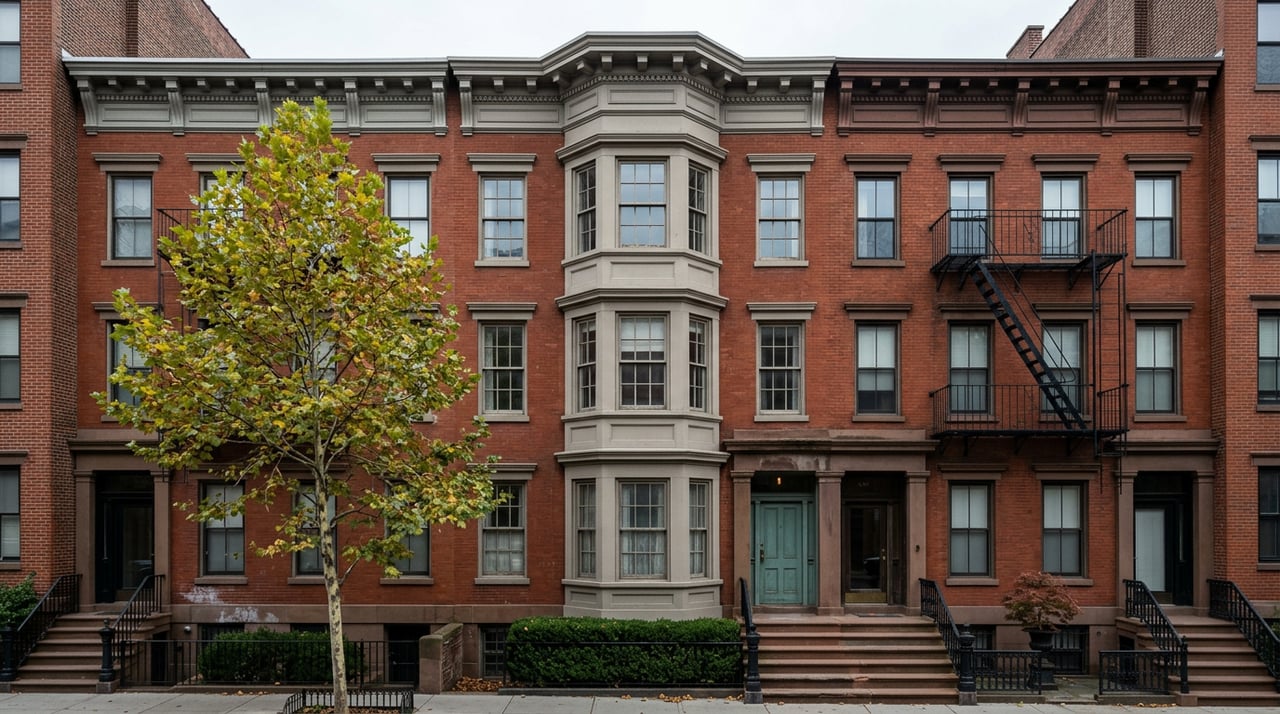
The storefront at 182 Smith Street has been empty long enough that most people who walk past it barely register it anymore. It sat as a Rite Aid until the chain's bankruptcy closures swept through, then sat empty a while longer, one more dark window between the wine bar and the dry cleaner. Then in June, word got out that Whole Foods had signed a lease for the space, roughly 35,000 square feet on the corner of Smith and Warren, right where Cobble Hill folds into Boerum Hill. No opening date has been announced. The build-out hasn't started. And yet that one empty storefront has become the thing everyone on Smith Street is talking about this fall, which is strange, because almost nothing about it has actually changed yet.
That's the real story of Cobble Hill this September: three separate calendars, a grocery lease, a wave of small openings, and one of Brooklyn's oldest street fairs, all converging on the same handful of blocks at once. None of them caused the others. But taken together, they say something about what Court Street, Smith Street, and Atlantic Avenue mean to the people who live here right now.
The Corner Everyone's Watching
According to reporting first surfaced through Crain's and confirmed by Brooklyn outlets, the Whole Foods lease at 182 Smith Street covers a space that's sat mostly dormant since Rite Aid's exit. Because the lease is fresh, there's no confirmed timeline for construction or an opening date, which means the corner will likely spend this fall and probably next winter as a construction site rather than a grocery store. That gap between "a company signed a lease" and "a store opened" is where a lot of neighborhood speculation tends to live, and it's already showing up in local conversation, including a fair amount of it on Reddit's Carroll Gardens thread, where reactions have split between people glad for a five-minute walk to a full-service grocer and people wondering what a second national chain that close to an existing one means for everyone already doing that job.
That second reaction points to something worth sitting with.
Two Grocery Anchors, Half a Mile Apart
Whole Foods already operates a location at 214 3rd Street in Gowanus, a walk of well under a mile from the new Smith Street address. That's not a grocery gap being filled. It's a company deciding this stretch of Cobble Hill and Boerum Hill is worth a second flag planted close enough to the first that some shoppers will genuinely have to pick one.
Cobble Hill was never short on places to buy food. Court Street alone carries a run of specialty grocers that residents have relied on for years: Sahadi's, Staubitz Market, Trader Joe's, Mercado Central, Tavola Italian Market. None of them do exactly what a 35,000-square-foot Whole Foods will do, and none of them are going anywhere because of a lease signing. But the arrival of a second big anchor within walking distance of a first one is a different kind of signal than "the neighborhood needed a grocery store." It's closer to a company betting that this particular stretch of Smith Street has enough daytime and evening foot traffic to support duplication, not just coverage. That's a read on the corridor's value that residents feel before any press release spells it out, mostly because they're the ones already deciding which market to walk to on a given afternoon.
Smith Street Isn't Waiting Around
While the Whole Foods corner sits quiet, the rest of the corridor hasn't slowed down for it. Bar Rêve, a cozy Francophile cocktail bar, opened on Smith Street this past April and has already become a regular stop for a boozy evening out. A few blocks over on Court Street, FAD Market has kept its quarterly rhythm going at St. Paul Church, a building that's hosted community gatherings in the neighborhood for generations. Its summer pop-up ran July 18 and 19, and the market's fall edition follows the same seasonal pattern, drawing browsers who make a day of it by wandering over to Court Street and Atlantic Avenue afterward.
That kind of small-scale churn is normal for this stretch. Mooburger, the longtime burger spot on Court Street, closed its doors after many years, one more entry in a corridor that has always traded some longtime tenants for new ones without losing its overall shape. What's notable this fall isn't that turnover is happening. It's that the turnover is happening on the same three blocks that are also waiting on a 35,000-square-foot anchor tenant to break ground, which means Cobble Hill's commercial identity is being pulled in two directions on the same sidewalk: toward a national grocery chain doubling down on the area, and toward the small, one-off openings that have always defined Court and Smith.
The One Weekend You Have to Choose
Atlantic Avenue runs its own calendar entirely separate from Smith and Court, and this fall it's producing the single biggest scheduling conflict of the season. The Atlantic Antic returns on Sunday, September 27, stretching ten blocks from Fourth Avenue to the waterfront and running straight through Brooklyn Heights, Cobble Hill, and Boerum Hill. It's one of Brooklyn's oldest and largest street fairs, and it lands on the exact same Sunday as Bay Ridge's Third Avenue festival, which means residents genuinely have to pick one afternoon over the other rather than catching both.
That overlap is worth noting because it's the clearest evidence that Cobble Hill's three commercial spines, Court Street, Smith Street, and Atlantic Avenue, don't actually move in sync. Atlantic Avenue's identity is built around one enormous annual event that pulls people in from across the borough. Smith and Court run on a steadier, smaller drumbeat of quarterly markets and rotating storefronts. A grocery chain doubling down on Smith Street doesn't change what happens on Atlantic Avenue in late September, and the Antic rolling through in a few weeks won't do anything to speed up construction on Smith. Each street is having its own fall, on its own schedule, and the only thing tying them together is that they all happen to run through the same zip code.
What Doesn't Change
Underneath all of it, the neighborhood's quieter routines keep going exactly as they have. The Cobble Hill Walking Club still meets weekday mornings at Cobble Hill Park, part of the informal network of stroller groups that Brooklyn parents lean on year-round, regardless of what's happening a few blocks away on Smith Street. It's a small thing, but it's the kind of continuity that tends to outlast whatever's dominating the local group chat in a given season. Storefronts change hands. Leases get signed and sit dormant for months. Street fairs come and go on their own calendars. The walking club still meets at the same corner of the park it always has.
That's really the thesis worth carrying into October: nothing happening on Smith Street right now is really about Whole Foods, and nothing happening on Atlantic Avenue is really about grocery competition. They're three unrelated timelines that happen to intersect on the same few blocks this particular fall, and the neighborhood's actual character shows up in how comfortably it holds all three at once, a stalled construction lease, a run of small openings, and a street fair calendar that hasn't changed in decades.
If you're watching how a specific corner of Brooklyn is evolving, whether that's the Smith Street grocery scene or the broader rhythm of Cobble Hill's commercial streets, The Diamonde Team spends real time on these blocks and is always glad to talk through what any of it might mean for you. Schedule a private consultation whenever you're ready.