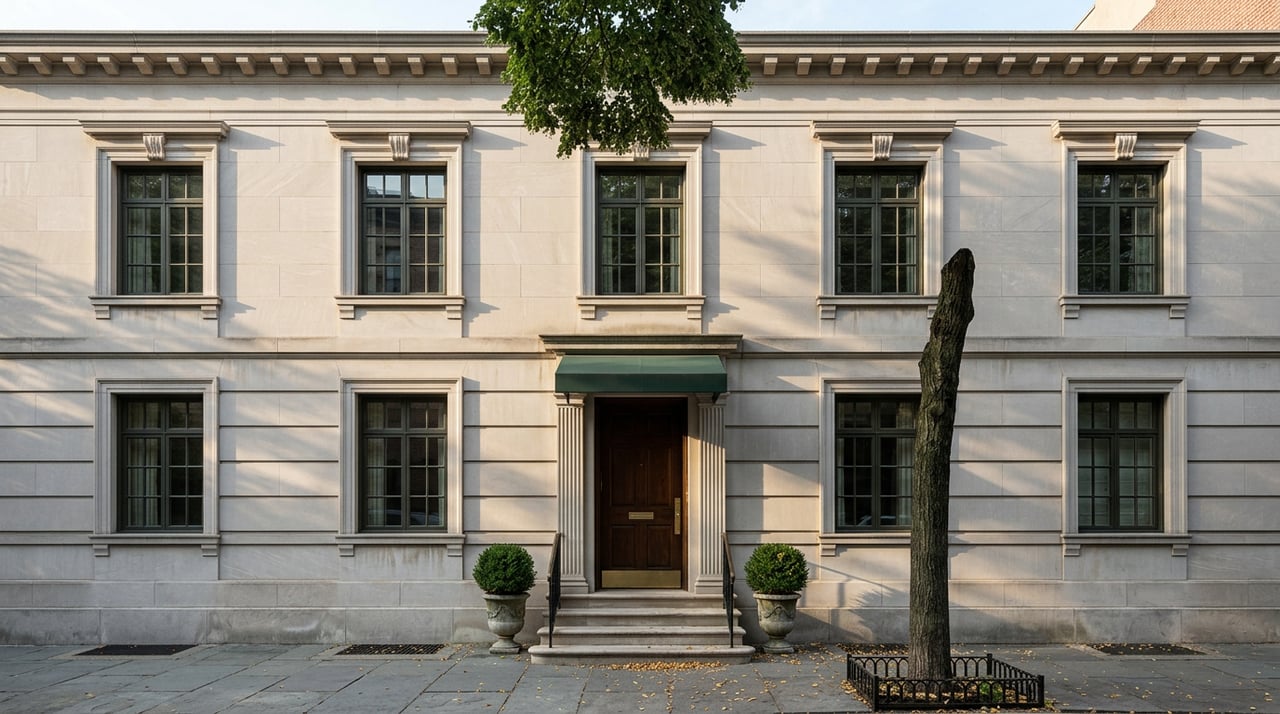
Walk east on 72nd Street this month and the first thing you will notice is what is missing. No coin toss at Bethesda Fountain. The model boat pond at 74th is still open for now. And if your Saturday routine usually ends with a coffee under the skylight at Café Sabarsky, you have already found the handwritten sign taped to the door at 1048 Fifth Avenue.
The three projects are happening in the same part of the city, but not on the same schedule. Each has its own construction work and timeline.
Three Projects, Different Timelines
Central Park Conservancy president Betsy Smith announced on July 22 that the Conservancy would spend a combined $37 million restoring Bethesda Fountain and Conservatory Water, the two landmarks that bookend most people's version of a walk through the park's east side. Bethesda went dark in early August. Conservatory Water, the model boat pond, follows later this year. A few blocks north, the Neue Galerie has been closed since May 27 for its own construction phase, which coincides with the museum's 25th anniversary and a newly announced plan to merge with the Metropolitan Museum of Art by 2028.
Here is the state of play as of this writing, block by block.
| Landmark | Status now | What stays open | Reopens |
|---|---|---|---|
| Bethesda Fountain | Drained and enclosed since early August | Bethesda Terrace and the Arcade, including the Minton tile ceiling | Roughly one year, targeting late summer 2027 |
| Conservatory Water (model boat pond) | Still filled, closure begins later this year | Alice in Wonderland and Hans Christian Andersen statues, surrounding benches and paths | Spring 2028, alongside the Kerbs Boathouse |
| Neue Galerie | Closed since May 27 | Nothing on-site until October | Café, shop and bookstore October 1; galleries November 12 |
The Fountain Is Older Than the Fix Suggests
Bethesda Fountain has been running continuously, more or less, since 1873, when sculptor Emma Stebbins became the first woman to receive a public art commission in New York City for her Angel of the Waters statue at its center. The fountain marked the 1842 opening of the Croton Aqueduct, the system that first brought clean drinking water into Manhattan. The last major work here was cosmetic, a 2007 restoration of the Arcade's Minton tile ceiling. What is happening now is different: crews are replacing the fountain's pumps and mechanical systems, repairing the cascading water circulation, and recreating sculptural details that decades of freeze-thaw cycles have worn away. That is not a facelift. It is the plumbing finally getting its turn.
The good news for anyone whose daily walk runs through here is that Bethesda Terrace itself, the two-level plaza and the underground Arcade, stays open the entire time. You lose the water. You do not lose the view of the Lake, the walk through the Arcade, or the steps where half the neighborhood already sits to eat lunch.
The Boat Pond's Longer Timeline
Conservatory Water has a longer, quieter case for repair. The concrete basin has been leaking so badly that Central Park Conservancy staff have struggled just to keep water levels high enough for the model sailboats to catch wind, according to Nick Koster, the Conservancy's vice president for design, who briefed the Upper East Side's community board on the plan. The fix addresses three things at once: rebuilding the leaking basin with a waterproof foundation, regrading the surrounding paths so the pond is accessible to strollers and wheelchairs (right now, steep grades and stairs make it difficult for many visitors to reach at all), and a full renovation of the 1954 Kerbs Boathouse, including doubled restroom capacity and a green roof visible from Fifth Avenue.
The Central Park Model Yacht Club, which has raced wind-powered boats here every Saturday from April through October since 1916, will lose its home water for the closure. The Conservancy's plan has the pond closing later this year, boathouse construction beginning in spring 2027, and both phases wrapping by spring 2028. That is a longer runway than the fountain's roughly one-year timeline; the two projects have different construction schedules.
The Museum Closure Is Doing More Than One Thing
The Neue Galerie's closure looks, on the surface, like routine maintenance to a Gilded Age mansion. It is not quite that simple. The museum's own leadership has framed this summer's construction as necessary upkeep for the building at 1048 Fifth Avenue, the 1914 limestone mansion it has occupied since 2001. Separately, the museum is preparing for a major institutional change. On May 14, the Met and the Neue Galerie jointly announced plans to merge by 2028, a move that will eventually bring the Neue Galerie's collection, including Gustav Klimt's 1907 Portrait of Adele Bloch-Bauer I, known widely as the Woman in Gold, under the Met's ownership while the museum continues to operate independently in the interim.
That means the Neue Galerie reopening this fall is not simply the same museum resuming normal hours. It is an institution mid-transition, celebrating a 25th anniversary that also functions as a kind of farewell tour for its current form. Café Sabarsky, the bookstore and the design shop resume regular hours on October 1. The galleries themselves stay dark another six weeks, reopening November 12 with the 25th Anniversary Exhibition, a museum-wide show pulling together collection highlights, the Klimt included, that runs through January 11, 2027. If you have a membership or a standing Sunday habit here, the two-stage reopening matters: you can get your coffee back in October, but the art waits until mid-November.
What This Actually Changes About the Season
None of these three projects individually would be worth much of a headline. Museums close for renovations. Fountains get shut off. What makes this fall specific to living here is that the projects are at different stages along the east side of Central Park, and each one affects a different piece of a routine that a lot of Upper East Side residents run without thinking about it: the museum stop, the walk past the water, the fountain as a landmark you use to tell visitors where to meet you.
The practical read is straightforward. If you want to see the model boats race before the pond closes, the window is now, on a Saturday morning between 10 and 1. If you are hoping to get back into the Neue Galerie's Klimt gallery, plan around November 12, not October 1. And if Bethesda Fountain has been your default answer to out-of-town guests asking what to see in the park, you can still walk them through the Arcade and the Terrace. You just cannot show them water running yet.
There is a version of this story that treats these closures as inconvenience. The more useful version, for anyone who has lived here long enough to have opinions about which entrance to the park is faster, is that this is what a neighborhood's infrastructure catching up on itself actually looks like from street level: not abstract, not somewhere else, but three landmarks within a ten-minute walk of each other, at different stages of work, all reopening on their own separate calendar over the next 18 months.
Knowing that calendar, block by block and month by month, is the kind of neighborhood detail that only comes from paying attention to this specific stretch of the city rather than the borough in general. The Diamonde Team works the Upper East Side alongside Manhattan, Brooklyn and the Hamptons, and we track the small, unglamorous changes, construction schedules included, that shape what it actually feels like to live on a given block here. If you are thinking about your next move in this neighborhood, or just want a second opinion on how a building's location stacks up against what is happening around it this season, schedule a private consultation and we will walk you through it.