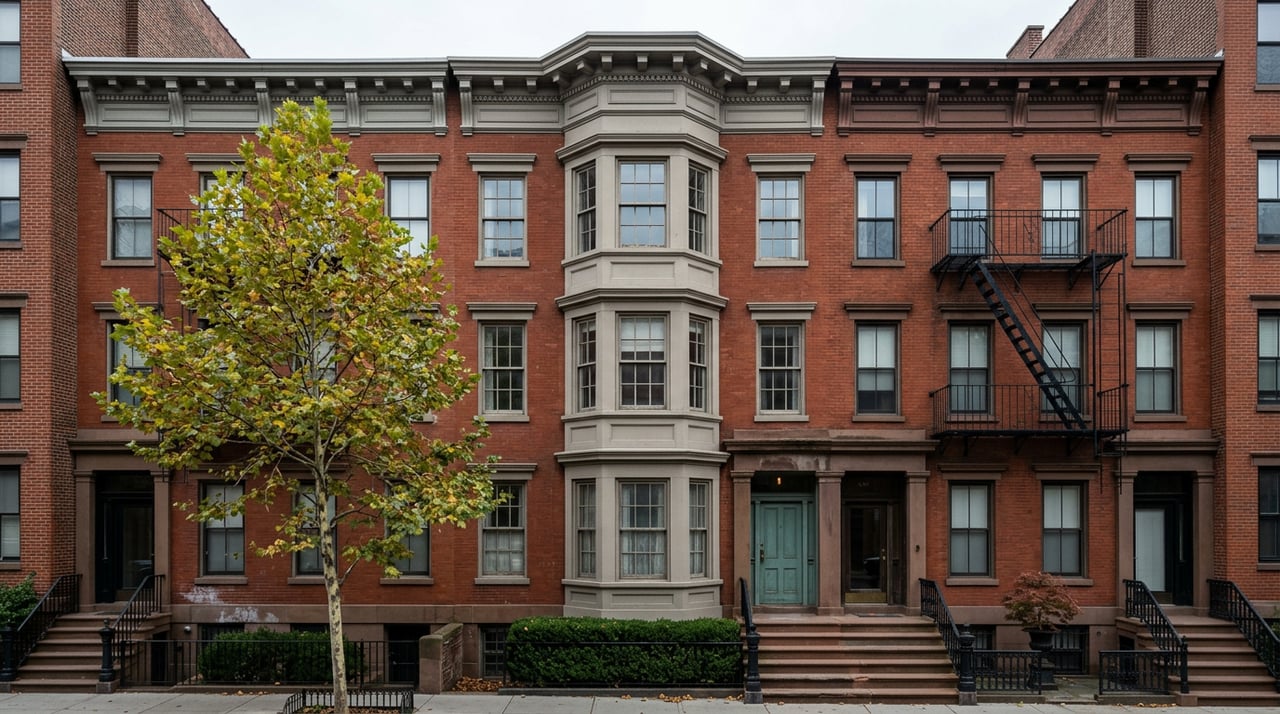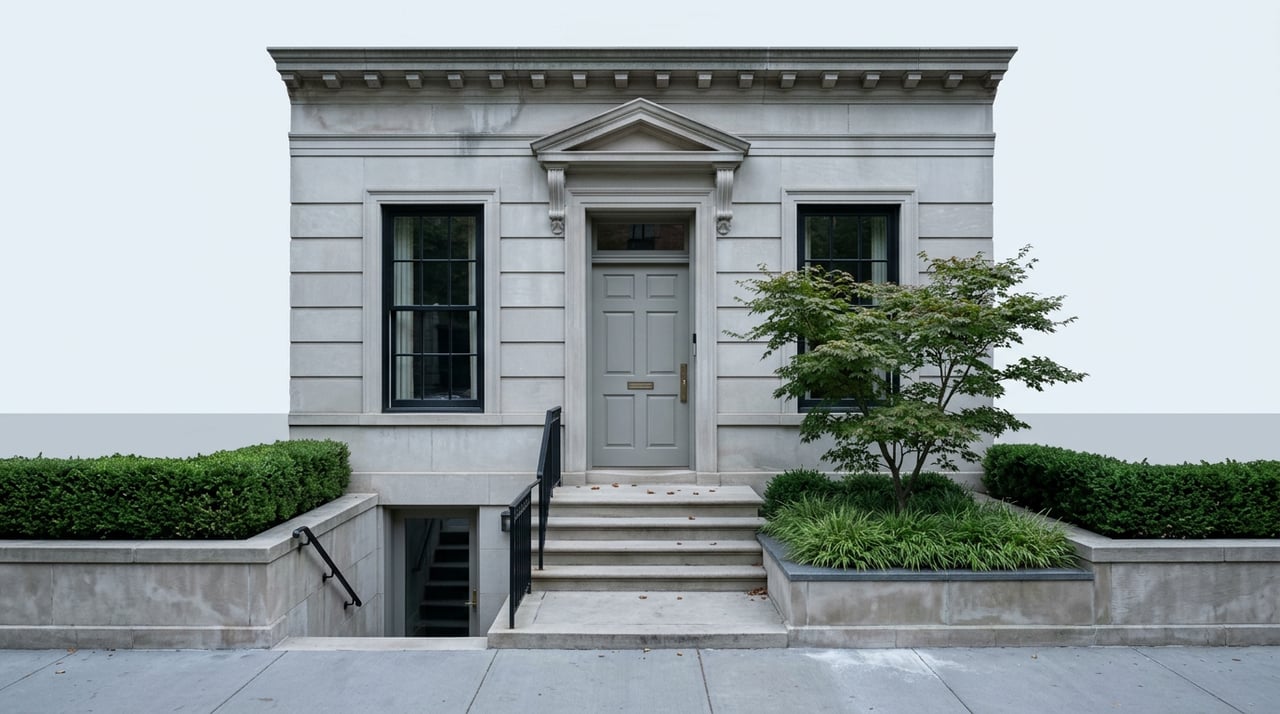
Walk two Upper East Side co-ops and two comparable condos in the same week and you will see it immediately. The layouts are similar. The light is similar. The finishes might even favor the co-op. Yet the co-op is priced at roughly half what the condo is asking.
Most buyers explain that gap with a shrug: co-ops are just cheaper, condos are just nicer. That explanation has never held up to scrutiny, and this fall it is being tested by an actual regulatory change that went into effect two months ago.
The Discount Was Never About the Kitchen
In the fourth quarter of 2025, the median co-op sale on the Upper East Side closed around $825,000. The median condo closed around $1.66 million, according to the Douglas Elliman and Miller Samuel Manhattan report for that quarter. That is not a modest spread. It is close to double.
Square footage and finish level explain some of it, since co-op inventory north of 60th Street skews older and condo product skews newer and larger. But brokers who work both sides of the market consistently point to something else: buyers are pricing in the cost of not knowing how long a deal will take to close, and whether it closes at all once a board gets involved. That uncertainty has a dollar value, and for years the co-op discount has functioned as the market's rough estimate of it.
Here is what that estimate has actually been buying, side by side.
| Co-op | Condo | |
|---|---|---|
| UES median price, Q4 2025 | ~$825,000 | ~$1.66 million |
| Buyer approval | Board interview, financial package, discretionary | Standard packet, rarely rejected |
| Typical contract-to-closing window | 2 to 4 months, sometimes longer | 30 to 45 days when priced correctly |
| Mortgage Recording Tax | None, shares are not real property | Roughly 1.925% of the loan amount |
| Combined closing costs | Roughly 2 to 3% | Roughly 4 to 6% |
Two lines in that table cut against the simple "co-ops are cheap" story. Co-op buyers skip the Mortgage Recording Tax entirely because they are purchasing shares in a corporation, not a deed. Combined closing costs run meaningfully lower on the co-op side too. Some of what looks like a discount is actually a fee structure working in the buyer's favor. What is not working in the buyer's favor, historically, is the middle row.
What the Old Timeline Actually Cost Buyers
A co-op board package on the Upper East Side is not a formality. Buyers typically submit tax returns, bank statements, pay stubs, employment letters, reference letters, and a REBNY financial statement, then sit for an interview. Boards look for liquidity well beyond the purchase price, sometimes two to three years of carrying costs in reserve on top of the down payment.
None of that is new, and none of it changed this year. What has historically compounded the friction is that boards had no obligation to act on any particular timeline. A complete package could sit for two weeks or two months with no requirement to explain the delay. Buyers locked mortgage rates that expired before an answer came back. Sellers kept a contract in limbo while a second buyer walked away from a different deal entirely. The contract-to-closing phase on a co-op has generally run two to four months, sometimes longer, compared with 30 to 45 days for a correctly priced condo.
That open-ended waiting period, not the apartment itself, is a large part of what the price gap has been compensating buyers for.
This Is the First Fall Under the Clock
On July 28, 2026, New York City's Local Law 58 took effect, putting every qualifying co-op board in the city on a legal clock for the first time in the city's history. The law does not touch a board's right to reject a buyer. What it does is force a schedule around the decision:
- Within 15 calendar days of receiving an application, the board must send written acknowledgment, by both email and registered mail, confirming the package is complete or listing exactly what is missing. If the board misses that window, the application is deemed complete by operation of law.
- Once complete, the board has 45 calendar days to approve, conditionally approve, or deny the application.
- Boards get one 14-day extension. Anything beyond that requires the buyer's written consent.
- Boards that do not typically meet in July and August can toll the clock during those months, but only if they adopted a written summer recess policy in advance and put it in the building's official records.
- Missing a deadline does not hand the buyer automatic approval. It gives them grounds to file a complaint with the city's Department of Housing Preservation and Development, which can issue civil penalties for noncompliance.
- The law applies to co-ops with 10 or more units. Condos are entirely exempt, since they are not cooperative corporations. HDFC co-ops and buildings requiring government housing agency approval, like Mitchell-Lama developments, are also excluded.
Two months in, the law's real test is happening now, not this summer. Boards that adopted a written summer recess notice were able to pause the clock through July and August. Buildings that did not, and any board reviewing an application submitted after Labor Day, are operating under the full 15-and-45-day framework as the fall selling season gets underway on the Upper East Side. This September is the first stretch where the law is running at full strength against a normal volume of live transactions.
If timeline uncertainty has genuinely been part of what widened the co-op discount, this is the season where that assumption gets its first real stress test.
The Number Nobody Compares Correctly
Even setting the timeline aside, buyers routinely compare a co-op's monthly maintenance to a condo's common charges as if the two numbers measure the same thing. They do not.
Co-op maintenance is an all-in figure. It typically bundles the building's operating costs, the shareholder's share of the building's property tax bill, and, if the building carries one, a share of an underlying mortgage. Condo common charges cover operations only. Property taxes on a condo are billed separately by the city, usually quarterly, and are the owner's responsibility alone.
Picture a co-op with $1,400 a month in maintenance next to a condo with $700 a month in common charges. On paper the condo looks like it costs half as much to carry every month. Add the condo's separate property tax bill, often close to $700 a month for a comparable Upper East Side unit, and the two numbers land in the same place. The apparent savings on the condo side is often just a different place on the bill where the same cost gets itemized.
Reviewing a building's audited financials before making an offer is the only way to know whether that $1,400 co-op maintenance number reflects a well-funded reserve and reasonable staffing, or a building quietly heading toward a special assessment.
The Flip Tax Shows Up at the Worst Possible Time
For sellers, the friction that catches people off guard is not the board package, it is the flip tax. Most Manhattan co-ops charge one at resale, typically 1 to 3 percent of the sale price, and on the majority of Upper East Side buildings custom dictates the seller pays it. The rate itself is set by the building's proprietary lease or bylaws and is not something a seller can negotiate. Who pays it, in some buildings, is.
On a $1.4 million sale, a 2 percent flip tax is $28,000 coming directly out of net proceeds, on top of broker commission and the usual closing costs. Sellers who price a co-op by working backward from what they need to walk away with, without accounting for the flip tax first, tend to find that number changes once the calculation runs the other direction. Buildings use this revenue to fund capital projects and keep everyone's monthly maintenance from rising, so the fee has a purpose. It is just a purpose that shows up on the closing statement, not the listing.
So Does the Discount Actually Shrink
Nobody can promise it will. Boards still have full legal discretion to reject an applicant for almost any reason, and Local Law 58 does not touch that. What the law removes is the open-ended part of the wait, not the outcome.
But if a meaningful share of the historical co-op discount has been the market's way of pricing timeline risk, then a law that puts a hard ceiling on that risk should, over time, put some upward pressure on co-op pricing relative to condos. Co-op prices citywide were already showing signs of firming before the law took effect, with brokers noting renewed buyer interest in co-op inventory as the price gap widened to unusual levels. Whether that trend accelerates now that boards are working against an actual clock is the question worth watching this fall and into next spring, once a full season of applications has moved through the new framework.
For a buyer choosing between a co-op and a condo on the Upper East Side right now, the practical takeaway is not to assume the old discount still reflects the old risk. Part of what you were paying less for has a lower ceiling on it than it did two months ago.
Quick Questions
Does Local Law 58 apply to every co-op building on the Upper East Side? Only buildings with 10 or more residential units. Smaller buildings, HDFC cooperatives, and buildings that require approval from a government housing agency such as Mitchell-Lama are exempt.
If a board misses the 45-day deadline, is my purchase automatically approved? No. Missing the deadline does not approve the application. It gives you grounds to file a complaint with the city's Department of Housing Preservation and Development, which can pursue civil penalties against the building.
Do condo boards have anything similar to worry about? No. Condos are not cooperative corporations, so Local Law 58 does not apply to them at all. Condo review has generally been lighter and faster already, which is part of why the timeline gap existed in the first place.
If you are weighing a co-op against a condo on the Upper East Side this fall, or pricing one to sell against condo comps that do not tell the whole story, The Diamonde Team can walk through the specific building's financials, board history, and flip tax structure before you write an offer or set a list price. Schedule a private consultation to get the numbers that actually apply to your building, not the neighborhood average.