What makes a Hamptons village home feel timeless the moment you see it? It is rarely one flashy feature. More often, it is a careful mix of shingles, rooflines, porch depth, window rhythm, and landscape that all work together. If you are buying, selling, or refining a village property, understanding those details can help you read value more clearly. Let’s dive in.
Why village homes feel so classic
The look many people associate with Hamptons village homes comes largely from late-19th-century Shingle Style houses and cottages. According to SAH Archipedia, that style is defined by wood shingles that wrap entire buildings, open porches, irregular rooflines, and a more fluid relationship between indoor and outdoor space.
In East Hampton and Southampton, that language became part of the local streetscape rather than a style reserved for only a few landmark homes. Official village history and design guidance point to shingled cottages, summer houses, open land, and an informal neighborhood character as lasting influences on how these places look and feel today.
That is why the best village houses often seem settled and natural. They do not look overdesigned. Their architecture, siting, and landscape all reinforce one another.
Shingles set the tone
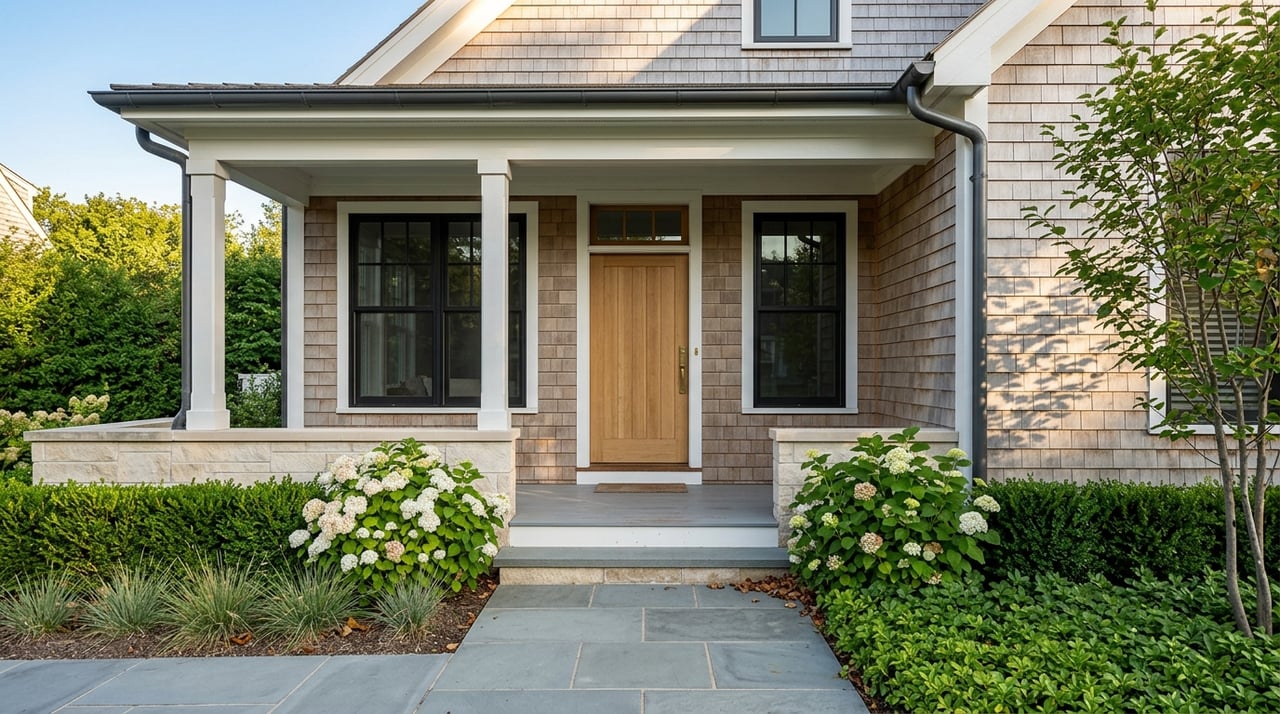
If there is one defining exterior detail, it is the shingle envelope. Southampton’s design guidance describes Shingle Style homes as typically clad in continuous wood shingles, often left unpainted except for trim and porch columns.
That choice does more than create texture. It gives the house a softer, more unified appearance, especially as the material weathers over time. In village settings, that visual continuity is a major part of what makes a home feel authentic.
Trim also matters, but usually in a restrained way. Local guidance notes white or dark-green trim as a common contrast against darker shingles, which helps architectural details read clearly without making the façade feel busy.
Rooflines shape the house
A true village home rarely reads as flat or boxy. The architectural vocabulary is more varied and picturesque, with gables, hips, gambrels, wide eaves, dormers, and asymmetrical massing all playing a role.
Historic examples in the region show how these forms create interest without excess. A gable here, a dormer there, and a porch tucked under a shed roof can make a house feel layered, balanced, and connected to the site.
For buyers, roof form can be a quick clue to overall design quality. For sellers, it is a reminder that a home’s strongest features are often already there and simply need to be protected, highlighted, and presented well.
Porches do more than decorate
In Hamptons village homes, the porch is not just a finishing touch. Southampton’s built-conditions report notes that porches soften building volume and create a human-scaled transition between public and private space. In one sample of favored village streets, 88% of homes had porches.
That statistic says a lot. A porch is part of the social and visual language of the street, and it helps explain why homes with thoughtful entries tend to feel more welcoming and more complete.
The detailing is usually restrained. Historic examples in Sag Harbor show squared or Doric posts, simple brackets, knee walls, and shallow shed roofs appearing again and again. The effect is calm and proportional rather than ornate.
What porch design signals
A well-composed porch often signals architectural confidence. It suggests the home was designed with transition, scale, and everyday use in mind.
For sellers, preserving porch configuration can help protect street presence. For buyers, porch depth and placement can be a useful quality marker, especially when paired with strong sightlines from the entry into the main living spaces.
Windows create rhythm
Another detail that defines village architecture is window proportion. East Hampton guidance recommends generally rectangular windows with a vertical orientation and a window-to-wall relationship similar to historic residences.
That matters because windows do not just bring in light. They establish rhythm across the façade. When spacing, size, and shape feel balanced, the entire home reads as more coherent.
Southampton’s guidelines also reference a traditional vocabulary that can include double-hung sash, casement, Palladian, and half-round or half-oval windows. Even with variation, the overall feeling is usually orderly and vertically scaled.
Why window rhythm matters in the market
Window rhythm is one of those details buyers may not name right away, but they often respond to it instinctively. It can make a façade feel composed and durable.
For sellers preparing a village home for market, original or well-matched windows can support the home’s architectural story. In design-conscious segments of the Hamptons market, that story often matters.
Landscape is part of the architecture
In Hamptons villages, the lot itself is part of the design. Local review processes in places like Sag Harbor ask for site plans showing buildings, fences, hedges, screening, driveways, and landscape features, which makes clear that the property is being evaluated as a whole.
Southampton’s homeowner guidance says preservation review pays close attention to historic trees and landscape elements that screen neighboring properties. The same guidance discourages upper-story decks that may affect privacy, reinforcing how seriously these villages take site relationships.
East Hampton’s official history highlights sweeping lawns, ponds, dunes, tall hedges, flowering plants, and expansive grounds as part of the local setting. These elements are not background. They are central to the character of the place.
The role of hedges and trees
Southampton’s built-conditions report describes the village as known for iconic privet hedges and notes that hedges work best when layered with street trees and gates. It also warns that overly privatized frontages can weaken the connection between houses and the street.
That balance is important. The best village properties feel screened and composed, but not cut off. Mature hedges, thoughtful planting, and a calm front yard usually support the architecture instead of competing with it.
Interior flow still matters
The classic village look is not only about curb appeal. Shingle Style is also associated with free-flowing plans and interlocking indoor and outdoor spaces.
That helps explain why broad halls, connected living spaces, and easy movement to porches or gardens still feel right in many Hamptons homes. The plan supports the architecture, and the architecture supports the lifestyle.
Southampton’s report describes porches as transitional spaces between public and private life. That idea extends indoors, where well-placed entries and clean sightlines often make a home feel more gracious and more resolved.
What buyers should notice
If you are searching for a Hamptons village home, it helps to look beyond finishes and focus on the bones of the property. Design details that fit local village patterns often age better and hold their appeal.
Here are a few practical things to watch for:
- Continuous wood shingles or similarly compatible exterior materials
- Varied roof forms with strong proportions rather than flat, oversized massing
- A usable porch that feels integrated into the front elevation
- Vertically proportioned windows with a consistent rhythm
- Mature hedges, trees, and landscape screening that support the house
- Interior flow that connects naturally to outdoor spaces
These details can be useful quality signals because they align with the scale, materials, and visual rhythm local guidance is trying to preserve.
What sellers should protect
If you own a village property, the most valuable design details are often the ones buyers recognize emotionally before they can describe them. Street character plays a major role in how a home is perceived.
In many cases, the details worth protecting include:
- Original shingles and trim
- Porch proportions and entry sequence
- Window patterns and openings
- Mature trees and layered hedges
- A composed, uncluttered front yard
Southampton’s homeowner guide notes that property values in historic districts are often stabilized and enhanced. While each home and sale is different, that guidance helps explain why authentic materials, thoughtful maintenance, and compatible updates can matter so much in the market.
How additions succeed
Not every village home needs to be frozen in time. Updates and additions can absolutely work, but local guidance suggests the best results come when new work is subordinate to the original house and compatible with neighborhood scale and rhythm.
Southampton’s design guidelines explicitly prefer excellent new design over fake-historic imitation. That is an important distinction. The goal is not to copy the past too literally, but to create something that feels respectful, balanced, and durable.
For sellers considering improvements before listing, that principle matters. Design-forward changes usually perform best when they clarify a home’s strengths instead of overpowering them.
Why these details influence value
The strongest Hamptons village homes tend to feel effortless. Roof shape, porch depth, window proportions, shingles, and landscape all support one another, creating a house that feels rooted in its setting.
That kind of architectural consistency can shape how buyers respond to a home from the first photo to the first showing. It can also strengthen marketing because the property has a clear visual story.
For a design-minded audience, those details are not minor. They are often the difference between a home that feels generic and one that feels lasting.
If you are thinking about buying, selling, or repositioning a village property, a design-sensitive approach can make a meaningful difference. The Diamonde Team brings editorial marketing, architectural awareness, and boutique guidance to Hamptons village homes, with a private consultation tailored to your goals.
FAQs
What architectural style most influences Hamptons village homes?
- The best-known influence is late-19th-century Shingle Style, which is associated with wood shingles, open porches, irregular rooflines, and fluid indoor-outdoor living.
What exterior detail is most recognizable on Hamptons village homes?
- Continuous wood shingles on walls, and sometimes roofs, are one of the clearest visual signatures in village settings.
Why are porches important in Hamptons village architecture?
- Local guidance describes porches as important transitions between the house and the street, helping soften building volume and create a more human-scaled presence.
What window styles fit Hamptons village homes best?
- Official guidance points to generally rectangular, vertically proportioned windows, with traditional types such as double-hung sash, casement, Palladian, and half-round or half-oval windows appearing in the local vocabulary.
How does landscaping affect Hamptons village home design?
- Landscaping is treated as part of the overall architecture, with hedges, trees, screening, gates, and front-yard composition all shaping how a property fits its setting.
What should sellers preserve before listing a Hamptons village home?
- Sellers should pay close attention to shingles, trim, porch configuration, window rhythm, mature hedges, trees, and the overall calm composition of the front yard.
How should additions be designed for Hamptons village homes?
- Local guidelines suggest additions work best when they are subordinate to the original house and compatible with neighborhood scale and rhythm, rather than overly imitative or overpowering.