If you have ever wondered why one Tribeca penthouse trades at a premium far beyond even Manhattan’s luxury baseline, the answer is simple: ultra-luxury is defined by rarity, not just price. In Tribeca, buyers are not only paying for square footage. They are paying for privacy, architectural pedigree, meaningful outdoor space, and a home that feels closer to a townhouse in the sky than a standard condo.
That distinction matters if you are buying, selling, or simply trying to understand the top end of downtown Manhattan. Tribeca’s penthouse market has its own language, and the homes that command the highest numbers tend to share the same core traits. Let’s take a closer look at what truly defines an ultra-luxury penthouse in Tribeca.
Price Sets the Floor
Price is the starting point, but it is not the full story. According to the Douglas Elliman Manhattan market report, the luxury entry threshold in Manhattan was $4.2 million in Q4 2025, with a luxury median sale price of $6.04 million and an average of $2,950 per square foot.
That already places luxury real estate in a rare category. But ultra-luxury sits well above it. The same report notes that Compass defines ultra-luxury as homes sold for $10 million and above, and Manhattan recorded 307 such transactions totaling $7.55 billion in 2025.
In the broader SoHo and Tribeca condo submarket, 2024 averages were $4.44 million and $2,169 per square foot, according to the same Elliman reporting. That contrast is important because it shows how true trophy penthouses stand well above neighborhood averages. In Tribeca, a penthouse does not become ultra-luxury simply because it is expensive. It becomes ultra-luxury when the product itself is almost impossible to replicate.
Scale Creates House-Like Living
One of the clearest markers of an ultra-luxury penthouse is scale. The top homes in Tribeca are often full-floor, duplex, or triplex residences with proportions that feel much closer to a private house than an apartment.
This pattern is easy to see in recent examples. At 111 Murray, the Collector’s Penthouses are full-floor homes with more than 7,400 interior square feet, roughly 200 exterior square feet, and 360-degree panoramic views. At 108 Leonard, a recent penthouse offering included 8,770 square feet and windows on three sides, while a penthouse at 443 Greenwich sold with about 5,400 square feet of interior space and a massive terrace.
Large square footage alone is not enough. What matters is how that size lives. In the best Tribeca penthouses, the layout supports separation between entertaining, private retreats, and outdoor living, which gives the home a sense of volume and ease that buyers at this level expect.
Privacy Is a Core Luxury
In most segments of the market, amenities help drive value. In Tribeca ultra-luxury, privacy infrastructure often carries just as much weight.
That includes features like private elevator entry, full-floor positioning, limited neighbors, and arrival experiences designed to feel discreet. At 70 Vestry, the building was designed with a private driveway, a mid-block motor court, and automated parking, according to reporting citing the property’s design and amenity profile. At 443 Greenwich, the amenities include valet parking, 15 private on-site parking spaces, and 24-hour concierge service, as detailed on the building’s official amenities page.
For many buyers, this is what separates a beautiful apartment from a true trophy residence. The home must offer not only luxury finishes and views, but also a sense of removal from the city below.
Outdoor Space Must Feel Usable
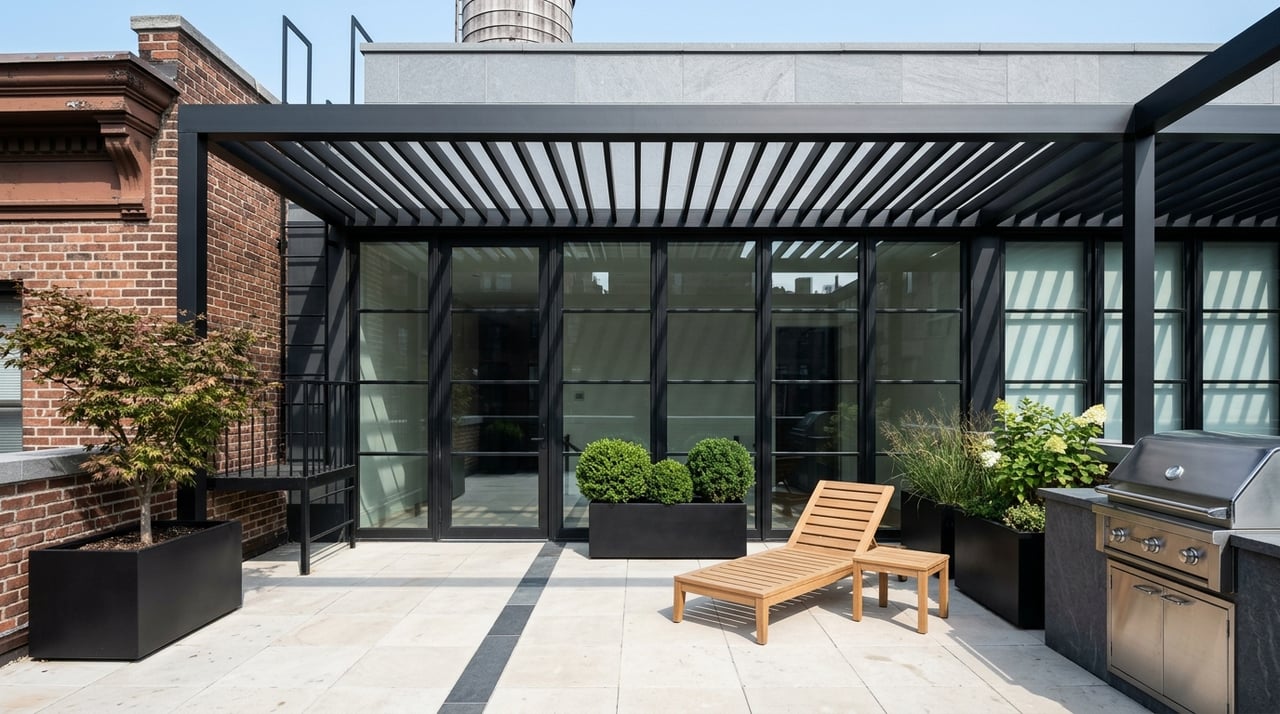
Outdoor space is one of the strongest defining features of a true Tribeca penthouse. Not every terrace adds the same value. In the ultra-luxury segment, buyers look for outdoor areas that function as real extensions of the home.
That means enough square footage for dining, lounging, entertaining, or even outdoor cooking. A recent sale at 443 Greenwich included a 2,600-square-foot terrace with an outdoor kitchen. The penthouse at 70 Vestry sold with more than 3,600 square feet of terrace, and the 108 Leonard clocktower penthouse combined 8,770 interior square feet with 3,082 exterior square feet, according to recent deal reporting.
This is a major reason penthouses command such premiums. In a dense downtown neighborhood, expansive private outdoor space is exceptionally limited. When that space is well integrated into the residence, it shifts the experience from apartment living to elevated indoor-outdoor living.
Views and Light Matter More at the Top
Ultra-luxury buyers in Tribeca expect exceptional light and outlooks. Multiple exposures, corner positioning, and broad skyline or river views all strengthen a penthouse’s market standing.
At the highest level, views are not treated like a bonus. They are part of the identity of the home. 111 Murray highlights 360-degree panoramic views, while recent reporting on a penthouse there noted outlooks over both the East and Hudson Rivers. Other benchmark listings have emphasized windows on three sides, dramatic glass walls, and floor-through plans that pull light deep into the interiors.
In practical terms, this creates the emotional quality buyers remember. A penthouse may have impressive dimensions, but without strong light and orientation, it may not reach the same level of desirability as a home with equally rare views.
Building Pedigree Shapes Value
Tribeca is not a neighborhood where architecture is background detail. It is central to value.
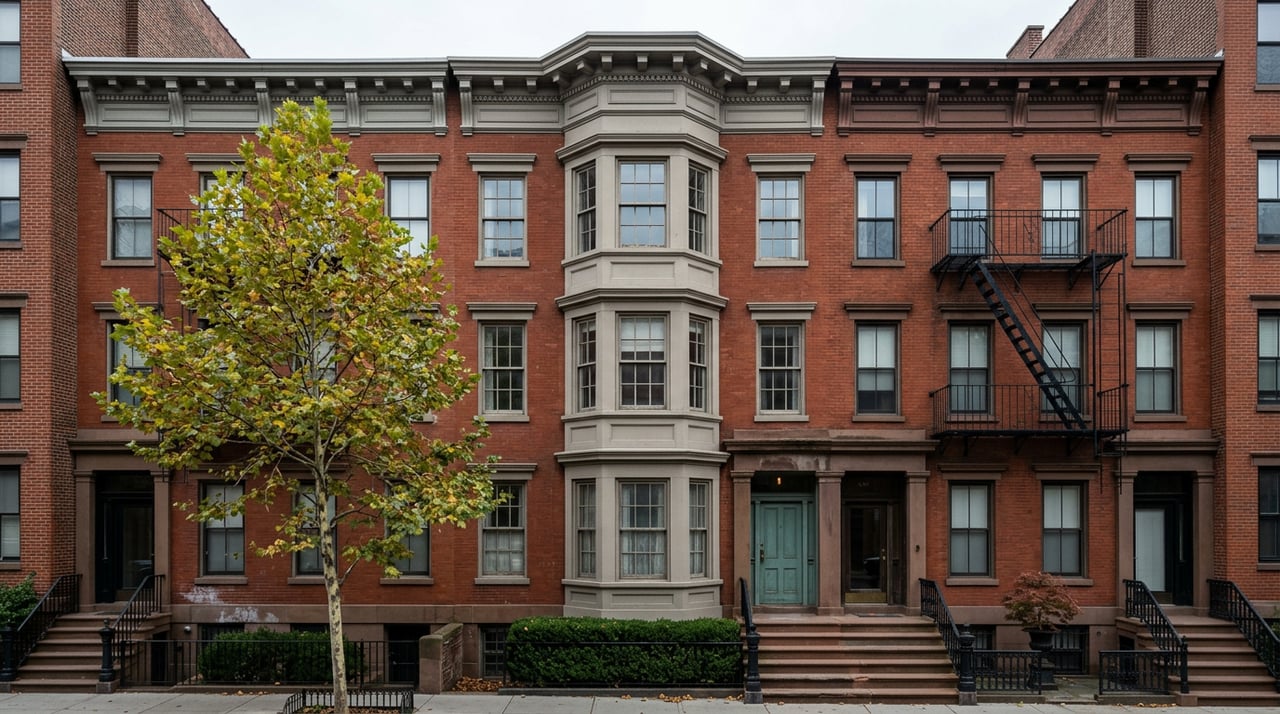
The area sits within the Special Tribeca Mixed Use District, and the neighborhood includes multiple historic districts identified by the Landmarks Preservation Commission, including Tribeca West, Tribeca North, Tribeca East, Tribeca South, and the Tribeca South Extension. City planning and LPC materials describe Tribeca as a former commercial and industrial center known for ornate store-and-loft buildings, with residential conversion beginning in a meaningful way in the 1970s as tenants moved into former loft spaces.
That context helps explain why pedigree matters so much here. In Tribeca, the market often rewards penthouses in landmark loft conversions and architecturally significant buildings because they offer a story buyers can immediately understand. The appeal is not only that the home is large or expensive. It is that the residence belongs to a building with identity, context, and credibility.
Amenities Tend to Be Boutique
Tribeca’s ultra-luxury buildings do offer extensive amenities, but the style is often more private and curated than flashy. That aligns with the neighborhood’s broader character.
For example, 443 Greenwich features a 75-foot lap pool, a 5,000-square-foot roof deck, a wine cellar, a hammam, valet parking, and concierge service. 111 Murray pairs a 24-hour attended lobby with more than 20,000 square feet of amenities, including a 75-foot pool, hammam, and large dining and lounge spaces. At 70 Vestry, reported amenities include a skylit pool, automated parking, upper-floor terraces, and a private arrival sequence.
In other words, the amenity package supports the lifestyle, but it does not usually overshadow the residence itself. In Tribeca, the penthouse remains the star.
Recent Sales Show the Pattern
Recent benchmark trades make the market’s preferences clear. On December 3, 2025, a penthouse at 443 Greenwich Street sold for just under $40 million. The home measured about 5,400 square feet and included that 2,600-square-foot terrace and outdoor kitchen.
In June 2025, a penthouse at 111 Murray Street entered contract for just under $34 million after reductions from an initial $45 million ask. It spans 7,500 square feet, has two terraces, and looks over both rivers. In February 2026, the penthouse at 70 Vestry Street sold for $57 million with 7,800 square feet, more than 3,600 square feet of terrace, two private parking spaces, and private storage.
The 108 Leonard clocktower penthouse went into contract in 2025 at $19.25 million for 8,770 square feet plus 3,082 exterior square feet, while 56 Leonard’s 2025 relist at $17.75 million featured a 50-foot glass wall, 12-foot ceilings, a private elevator, and a fireplace, according to recent reporting on top deals.
Across these examples, the same themes repeat:
- Large, house-like layouts
- Significant private outdoor space
- Multiple exposures and memorable views
- Private elevator or discreet arrival experience
- Building pedigree and architectural identity
- Amenities that emphasize privacy and comfort
That consistency is what defines the category.
What Buyers and Sellers Should Watch
If you are evaluating an ultra-luxury penthouse in Tribeca, it helps to think beyond headline price. The strongest properties usually combine several forms of scarcity at once.
For buyers, that means looking at the complete package:
- Is the layout full-floor, duplex, or otherwise unusually private?
- Does the outdoor space function as a true living area?
- Are the views open, protected, and tied to multiple exposures?
- Does the building have architectural or market pedigree?
- Do the amenities support privacy and ease of living?
For sellers, positioning matters just as much as the asset itself. At this level, marketing has to communicate not only dimensions and finishes, but also the home’s story, spatial experience, and place within Tribeca’s architectural landscape.
That is where informed presentation can make a meaningful difference. For a penthouse audience, buyers are often responding to a combination of logic, scarcity, and emotional resonance, all at once.
The Real Definition of Ultra-Luxury
In Tribeca, an ultra-luxury penthouse is not simply the most expensive apartment in the building. It is a residence that delivers a rare blend of scale, privacy, outdoor living, views, and pedigree in one of Manhattan’s most architecturally distinctive neighborhoods.
That is why these homes occupy such a narrow and valuable segment of the market. They are hard to replace, hard to duplicate, and easy to recognize when all the right elements come together.
If you are considering buying or selling a high-end property in downtown Manhattan, working with an advisor who understands both the numbers and the narrative is essential. The Diamonde Team brings a boutique, design-aware, and market-savvy approach to luxury real estate, with the strategic marketing and negotiation experience to help you move with confidence.
FAQs
What price range qualifies as ultra-luxury in Manhattan?
- In current Manhattan reporting, ultra-luxury is commonly defined as $10 million and above, while the luxury entry threshold was $4.2 million in Q4 2025.
What features define a true Tribeca penthouse?
- A true Tribeca penthouse is typically defined by scale, privacy, multiple exposures, meaningful outdoor space, and strong building pedigree, not price alone.
Why is outdoor space so important in Tribeca penthouses?
- Outdoor space is important because large private terraces and roof decks are scarce in Tribeca and can function like true outdoor rooms for dining, entertaining, and everyday living.
How do recent Tribeca penthouse sales reflect buyer demand?
- Recent sales at 443 Greenwich, 111 Murray, 70 Vestry, and 108 Leonard show that buyers consistently pay more for homes with large layouts, major terraces, privacy features, and recognizable building identity.
Why does building pedigree matter in Tribeca?
- Building pedigree matters because Tribeca’s market is closely tied to its historic loft architecture, landmark context, and architecturally notable residential conversions and towers.
What should sellers emphasize when marketing an ultra-luxury Tribeca penthouse?
- Sellers should emphasize the home’s rarity, privacy, outdoor space, views, layout, and architectural story, supported by polished, high-quality presentation.